
 Bucket Truck with Operator

Deeply Rooted Tree Services
Bridgeport, Texas
No reviews yet
Tree service with ISA Certified Arborist on staff

A bucket truck puts an arborist in the canopy in a minute rather than a climb. For roadside pruning, clearance work and straightforward removals where the tree can be reached from a driving surface, it is simply faster — and it keeps the operator on a platform rather than on a rope, which matters over a long day of repetitive work.
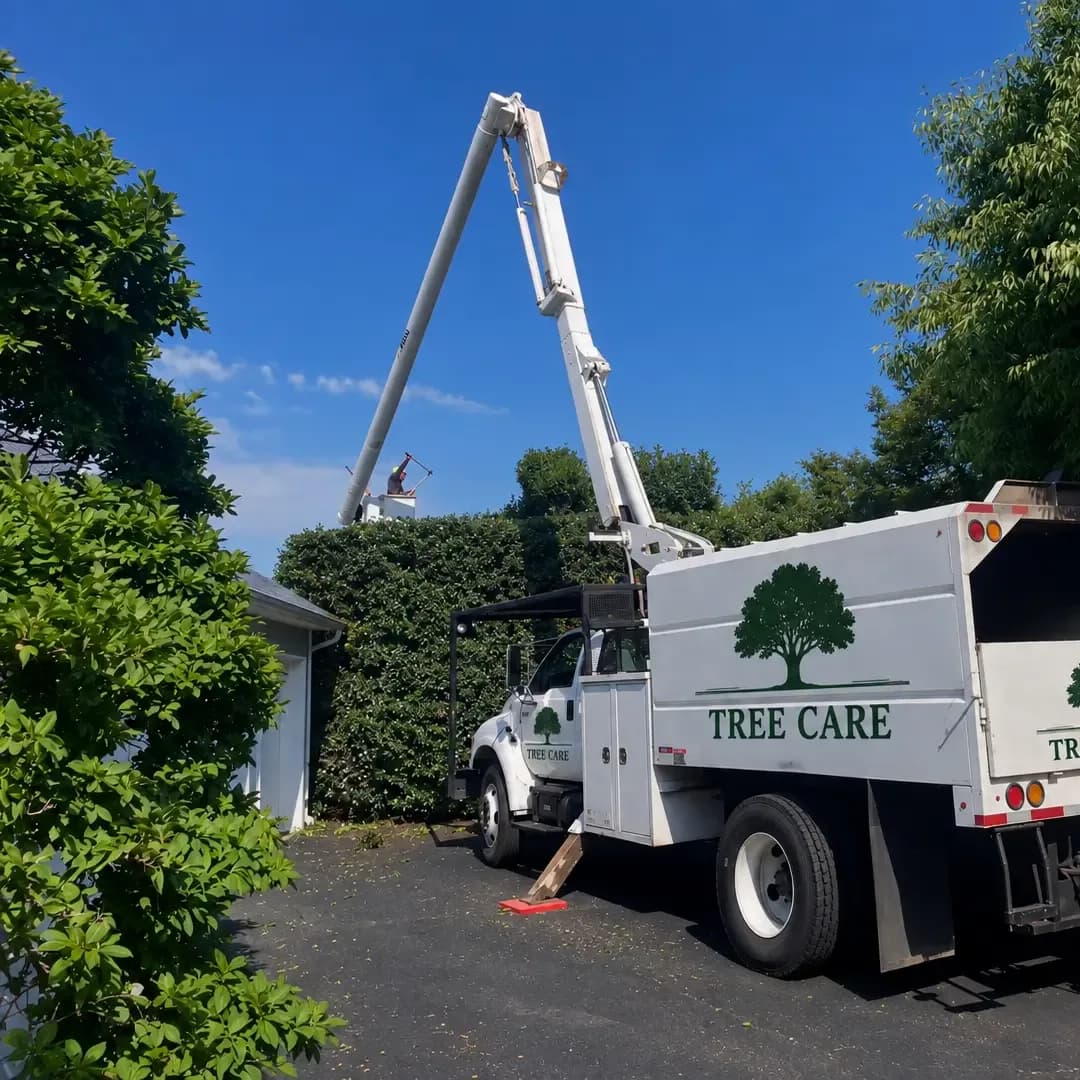
Its limitation is access. The truck has to get to a surface that will take its weight and within working radius of the tree, which rules out backyards, soft ground and anything behind a gate. Where it fits, it's the most productive tool in tree care; where it doesn't, a spider lift or a climber is the answer.
Post the job with the working height you need, where the truck can park and how far the tree is from there, and bucket truck providers whose radius covers you are notified. Working height and side reach are both worth stating — a lift that reaches 60 feet straight up may not reach a tree 30 feet from the curb.
Bucket trucks earn their keep on volume work: street-tree pruning, utility clearance, long runs of roadside maintenance, and straightforward removals within reach of a driveable surface. On repetitive pruning the productivity gap against climbing is enormous, and it saves an experienced climber's body across a long season.
The variables to settle are working height, side reach at that height, and outrigger footprint. Insulated booms are a separate question and a required one near conductors — as is whether the operator is line-qualified, which is about the person rather than the truck. Ask about weight too: some driveways and verges won't take one.
Day rates are standard, with a mobilization charge for anything beyond the usual radius. A half-day is often available for a single tree. Whatever the shape, it's agreed directly with the provider — Treelign makes the introduction and stays out of the transaction.
For providers, a bucket truck and a competent operator is the most consistently rentable combination in tree care, because so many small companies have climbers and no lift. Publish working height, side reach, whether the boom is insulated, and whether your operator holds a line-clearance qualification — those four facts answer nearly every inquiry before it arrives.
Set a service radius that reflects a realistic road journey with a heavy vehicle, and use travel dates for longer contracts — a bucket truck booked into a region for two weeks of clearance work will be found by everyone else there who needs one.
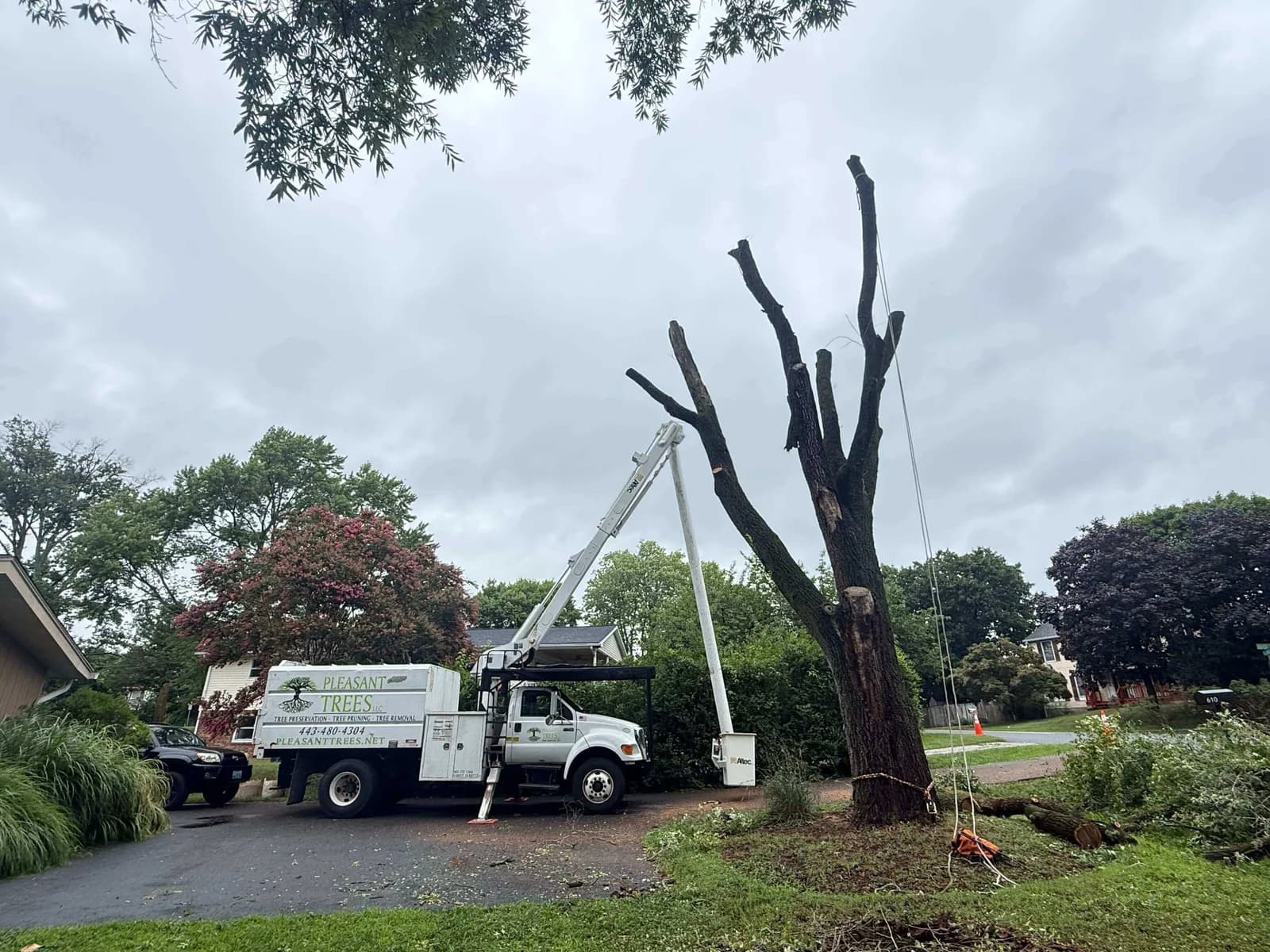
Volume pruning is where it wins outright. Street trees, roadside runs, utility clearance and repeated light work along a route — the lift resets between trees in a fraction of the time a climb takes, and the operator finishes the day with something left.
Straightforward removals within reach of a driveable surface suit it too, particularly where the tree is dead or unsafe to climb. Working from a platform rather than off the stem removes a real category of risk.
It also protects careers. A climber who spends twenty years ascending every tree by rope pays for it physically, and a lift on the routine work is how experienced people stay in the trade longer.
Two numbers, not one. Working height is how high the platform goes; side reach is how far out it goes at a given height, and it collapses as the boom rises. A lift that reaches 60 feet vertically may not reach a tree 30 feet from the curb at any useful height.
The truck also has to get there and be able to set up. Outriggers need footprint, driveways and verges need to carry the weight, and low branches or wires along the approach can stop a truck that would otherwise be perfect for the tree.
Insulated booms are a separate specification and a required one near conductors — and so is a line-qualified operator, which is about the person rather than the machine. If the work is near primaries, post it as utility line clearance instead.
Day rates including the operator, with a mobilization charge beyond the provider's usual radius. Half days are more commonly available than with cranes, because set-up is quicker.
On repetitive pruning the rate is usually easy to justify against the climbing hours it replaces. On a single awkward tree it often is not, and a climber is the better buy.
Rates are agreed directly between you and the provider — Treelign carries no payments.
Anywhere the truck cannot reach: backyards, courtyards, soft ground, steep sites, and anything behind a gate. A spider lift solves some of those; a climber solves all of them.
Trees whose useful working positions are inside the canopy rather than at its edge also favor rope access. A bucket works the outside of a tree well and the interior poorly.
And on fine pruning in a complex crown, a climber can position for every cut in a way a platform cannot. The lift is faster; the climber is more precise.
Post the job with the working height you need, where the truck can park, how far the tree is from there, and whether the ground will take the weight. Providers whose radius covers you are alerted immediately.
Their profiles list working height, side reach, whether the boom is insulated and whether the operator holds a line-clearance qualification — which answers nearly every question before you message.
Add chipping, ground support or hauling as separate services on the same job, each with its own crew size, and agree rates directly with whoever you hire.
Bridgeport, Texas
No reviews yet
Tree service with ISA Certified Arborist on staff


Willits, California
No reviews yet
Serving the community for over thirty years. We look forward to meeting like minded professionals.

Green Bay, Virginia
No reviews yet
For over 30 years, J-Bird's Tree Service has stood as a trusted provider of premier tree services! 🌳We would love to opportunity to subcontract and work together with other tree services to streamline and make business relationships with other companies.
More than the height you're cutting at, and enough side reach to get there from where the truck can park. Lifts are rated for working height and for horizontal reach separately, and the second is what usually catches people out. Give both the tree height and the distance from the parking spot when you post.
Restricted access, soft ground, tight backyards, steep slopes, and trees whose useful working positions sit inside the canopy rather than at its edge. A spider lift handles most access problems; a climber handles the rest. Say what the access is like and providers will tell you honestly.
Yes — every equipment service on Treelign is the machine plus a qualified operator. If you have your own bucket truck and need only a person to run it, that's the separate 'operator for company-provided equipment' service instead.
It's the standard tool for it, but only with a line-qualified operator — working near energised conductors requires that qualification regardless of the machine. If the job is line clearance, post it as utility / line-clearance arborist so the right people see it.
Treelign is a trade-only hiring platform built specifically for the tree care industry. Tree service companies post jobs for the positions and equipment they need, and qualified tree professionals nearby are notified and can apply immediately. It connects companies with contract climbers, crane and bucket truck operators, stump grinders, trainers and other specialists — without cold calls or Facebook group posts. Browsing is public; a free account is needed to apply, message a provider, or see a job's exact address.
General job boards and Facebook groups aren't built for tree work. Treelign is structured around the industry's actual positions and equipment, matches by service area, and notifies qualified professionals the moment a job is posted. Instead of broadcasting into a group and hoping the right climber sees it, you reach the people who do that specific work near you — and each service on a job carries its own crew size, so a job can be filled by several providers at once.

A conventional mobile crane with a telescoping boom that uses a cable, winch, and hook to lift and lower tree sections. Stick cranes are commonly used when large limbs or trunk sections must be lifted over structures or other obstacles. This service includes the crane and a qualified operator.
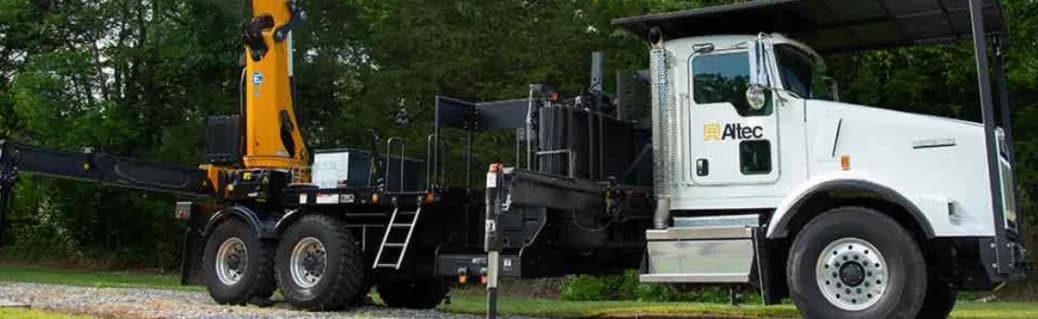
A truck-mounted crane with an articulating hydraulic boom that bends at multiple points for material handling, lifting, and loading. Knuckleboom cranes may be equipped with a grapple or grapple saw and are commonly used to remove, handle, load, and transport tree sections. This service includes the crane and a qualified operator.
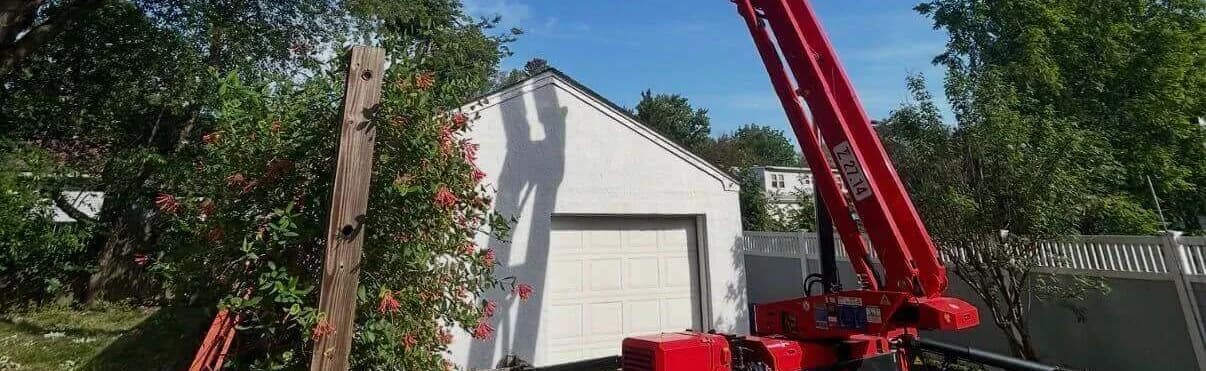
A compact, tracked aerial lift with outriggers designed to travel through narrow-access areas and operate on lawns, slopes, and sensitive terrain. Spider lifts provide elevated access in locations conventional bucket trucks cannot reach. This service includes the lift and a qualified operator.
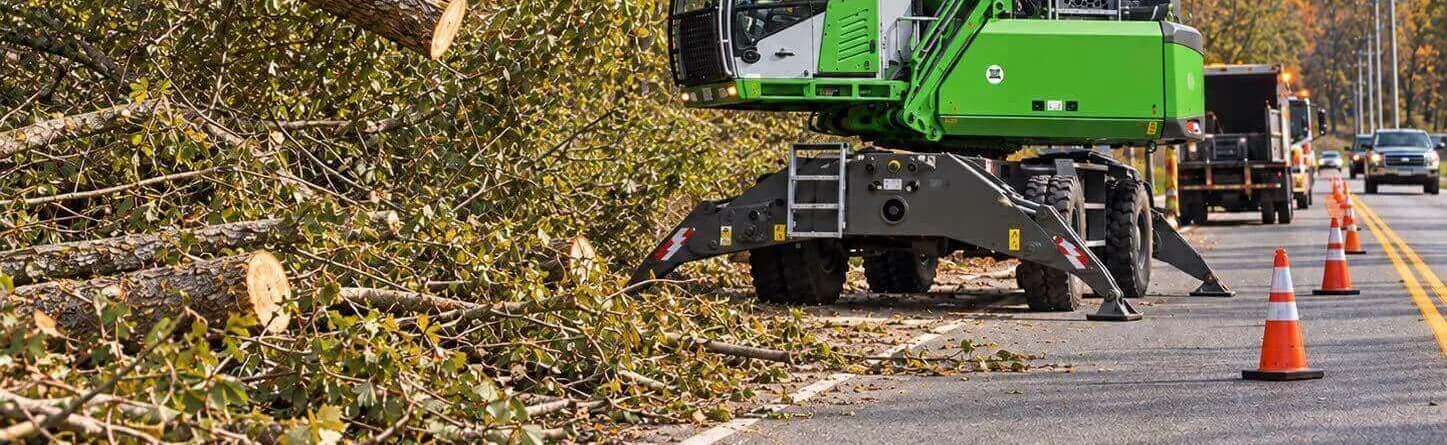
A purpose-built tree-handling machine — a telehandler or knuckleboom-equipped carrier fitted with a grapple saw or grapple head — used to cut, hold and place tree sections without a climber in the tree. This service includes the machine and a qualified operator.
Need help finding the right help for your project? Our team is here to assist with any questions about bucket truck with operator and specialized services.
