

Storm Response Crews
Storm work is the part of the industry that can't be scheduled. A line of thunderstorms or a hurricane track turns a week of routine pruning into days of trees on houses, roads blocked, and utility crews needing clearance before they can restore power — all at once, in one area, with every local company already committed.
 Storm Response Crews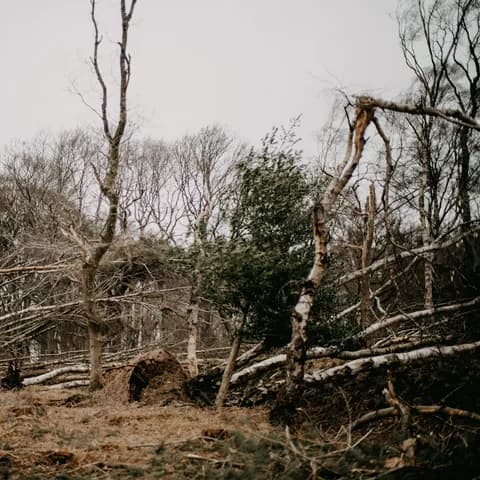
It is also genuinely different work. Trees under load behave unpredictably, and cutting them safely is a specific skill rather than ordinary removal done faster. Shifts are long, conditions are poor, and the crews who are any good at it are usually willing to travel and stay for days. Finding those people at 6am after a storm, by phone, is how most companies still do it.
Treelign is faster than the phone. Post what you need with the crew sizes, and qualified providers whose radius covers the area — including anyone who has listed travel dates that put them there — are notified immediately and can apply. You see who's actually available before you start calling, and you agree rates directly with them.
Storm demand arrives in two waves. The first is access and life-safety — trees across roads, on houses, on vehicles, and whatever the utility needs cleared before it can re-energise a circuit. The second is the long tail of damaged and destabilised trees that everyone books over the following weeks, and it is usually the larger contract.
The crews worth hiring are the ones who arrive self-sufficient. Fuel, saws, rigging, PPE, somewhere to sleep and a plan for getting paid all matter when the area has no power and every hotel is full. Ask what they bring, how long they can stay, and whether they've worked storm response before — cutting a tree under load is a different skill from cutting one standing, and it is not the moment to find out.
Storm rates differ from everyday tree work and everyone knows it; the honest version is a day or shift rate agreed clearly in advance rather than an hourly figure that drifts. Put the shift length, travel and standby terms in writing before the crew rolls. Treelign introduces the two of you and stays out of the money entirely.
For providers, storm work is the highest-earning fortnight in the calendar and the hardest to get into cold — companies default to crews they've used before. A profile that shows storm experience, the equipment you travel with, and how quickly you can mobilise is what gets you into that rotation when a company two states away is staffing up at short notice.
This is the service travel dates were built for. Set the window and the destination you're heading to and you appear in searches there for the duration, carrying the services you've brought — so a company clearing an area you're driving toward can find you before you arrive rather than after everyone local is booked.
What storm work demands that routine work does not
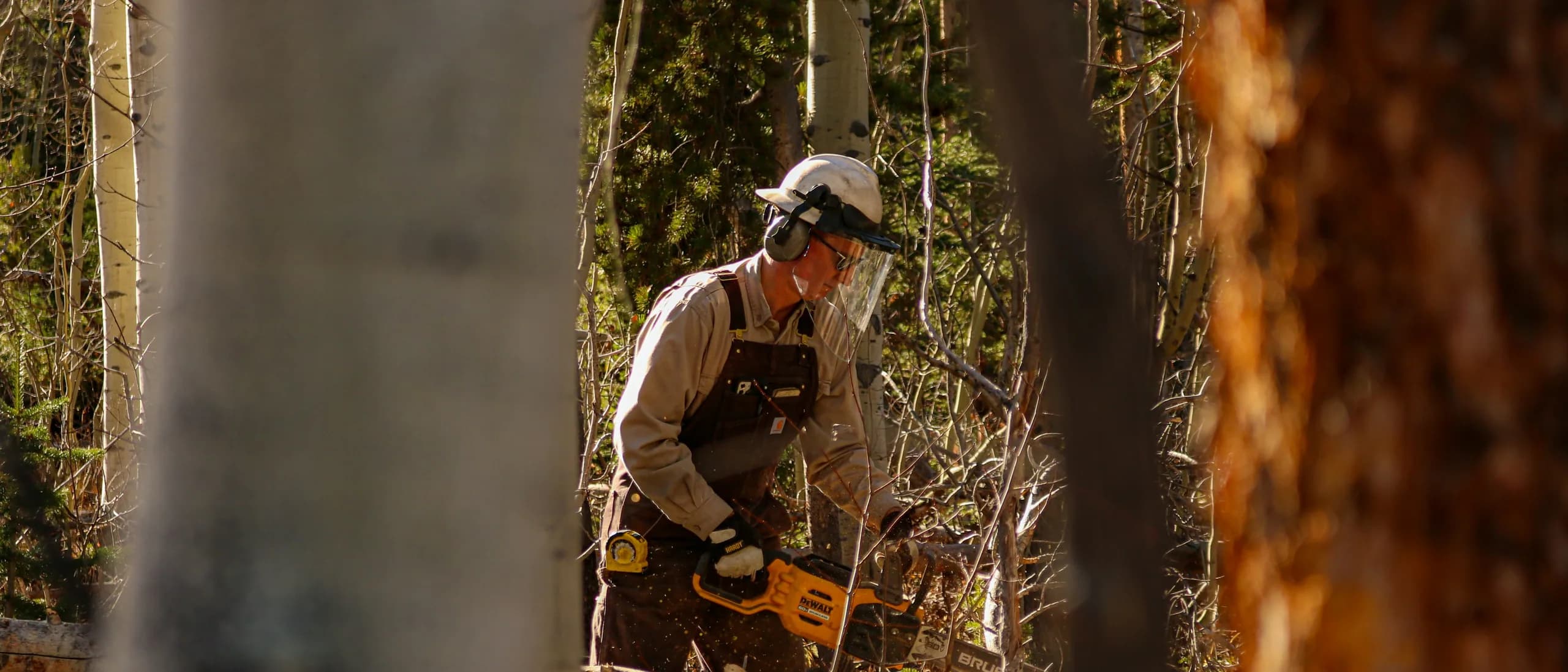
Trees under load behave nothing like standing trees. A stem bent against a roof, a partially uprooted trunk held by half its plate, a limb pinned by another limb — each stores energy that releases the moment it is cut, often in a direction that is not obvious. Reading that correctly before the saw starts is the entire skill.
Add damaged structures, possible live conductors, poor light, exhausted crews and property owners standing too close, and the assessment matters more than the cutting. The crews worth hiring are the ones who slow down at exactly the moment everyone wants them to hurry.
The work is also relentless. Twelve-hour shifts for a week or more, away from home, in an area with no power and nowhere to buy fuel or food.
Self-sufficiency and mobilisation
A crew that arrives needing fuel, saw chain, accommodation and directions is a crew you are managing rather than deploying. Ask what they travel with: saws and spares, rigging, PPE, fuel capacity, and whether they have somewhere to sleep arranged.
Ask how long they can stay. A two-day availability in a fortnight-long cleanup has limited value, and knowing the honest answer up front is better than discovering it on day three.
And ask when they can be on site. In storm response, a crew that arrives tomorrow is worth more than a better crew that arrives next week.
How storm work is priced
Day or shift rates are the honest structure, agreed clearly in advance, rather than an hourly figure that drifts as the days get longer. Expect a premium over routine work — it reflects travel, risk, long shifts and the fact that every company in the region wants the same people.
Standby and travel terms need settling explicitly. A crew that has driven six hours and is waiting on utility clearance is still a crew you are paying for, and both parties should know that before it happens.
All of it is agreed directly between you and the provider. Treelign carries no payments, holds no escrow and takes no commission.
Safety, utilities and sequencing
Assume every downed line is live until the utility says otherwise, and do not let a crew work a tree in contact with conductors without that confirmation. This is the single most common way people are killed in storm cleanup.
Sequence matters: access and life-safety first, then structures, then the long tail of damaged trees. Trying to do the tidy work while roads are still blocked wastes the window when the work is most valuable.
Document as you go. Insurance claims, municipal contracts and utility reimbursements all depend on records, and nobody reconstructs them accurately a fortnight later.
Hiring storm crews on Treelign
Post the job with the area, the crew sizes you need, the expected duration and whether accommodation is available. Providers within range are alerted immediately — and so is anyone who has set travel dates covering the affected region.
That travel-date behaviour is what makes this practical. Crews heading toward an affected area appear in searches there before they arrive, so you can staff up from outside the region while everyone local is already committed.
Post each capability as its own service — climbers, ground crew, hauling, cranes — so the parts fill independently rather than waiting on one provider who can supply everything. Rates are agreed directly with each.
Frequently Asked Questions
What makes storm work different from ordinary removals?

Trees under load. A stem bent against a roof, a partially uprooted trunk, a limb held by another limb — each stores energy that releases the moment it's cut, and in an unexpected direction. Add damaged structures, possible live conductors and poor light, and the assessment before the saw starts matters more than the cutting itself.
How quickly can I put a storm crew together?
Post the job and providers within range are notified straight away, so applications can arrive within minutes rather than after an afternoon of phone calls. How fast a crew is actually on site depends on distance and on how many local providers are already committed — after a major event, expect to be hiring from further away.
Do storm crews travel?
Frequently, yes — travel is closer to the norm than the exception for major events. Providers can add travel dates for the period they'll be in an area, which puts them in searches at that destination for the duration. If you're a provider heading toward a storm, adding those dates is how the work in that area finds you.
Should I post storm work as one service or several?
Several, if it needs several. A tree on a house may need a climber, a crane and ground crew; road clearing may just need saws and hauling. Each service carries its own crew size and fills independently, so you aren't waiting on one provider who can supply everything.
What is Treelign?
Treelign is a hiring platform built specifically for the tree care industry. Tree service companies post jobs for the positions and equipment they need, and qualified tree professionals nearby are notified and can apply immediately. It connects companies with contract climbers, crane and bucket truck operators, stump grinders, trainers and other specialists — without cold calls or Facebook group posts. Browsing is public; a free account is needed to apply, message a provider, or see a job's exact address.
How is Treelign different from Facebook groups or general job boards?
General job boards and Facebook groups aren't built for tree work. Treelign is structured around the industry's actual positions and equipment, matches by service area, and notifies qualified professionals the moment a job is posted. Instead of broadcasting into a group and hoping the right climber sees it, you reach the people who do that specific work near you — and each service on a job carries its own crew size, so a job can be filled by several providers at once.
Related services

Barge
Barge and marine access for tree work that can only be reached from the water — island properties, lake and river frontage, causeways and shorelines. Covers the vessel, the crew to run it, and the loading and hauling of crew, equipment and wood across the water.

Spider Lift with Operator
A compact, tracked aerial lift with outriggers designed to travel through narrow-access areas and operate on lawns, slopes, and sensitive terrain. Spider lifts provide elevated access in locations conventional bucket trucks cannot reach. This service includes the lift and a qualified operator.
Wood and Debris Hauling
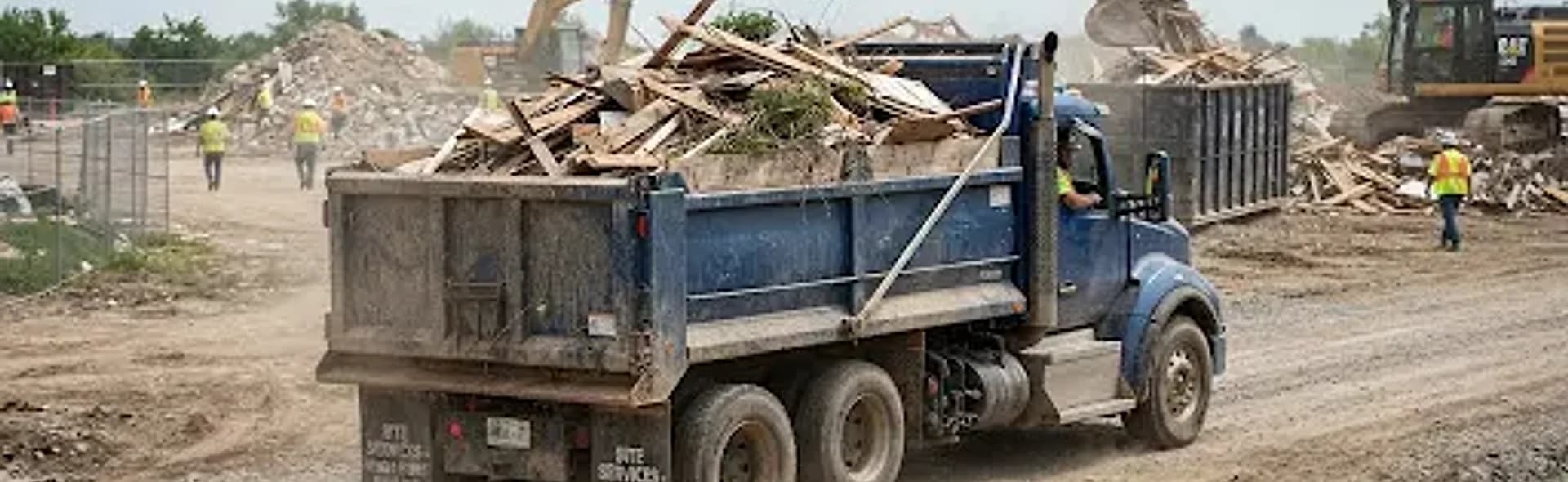
A hauling service for removing and transporting logs, brush, wood chips, tree sections, and other tree-related debris from a jobsite. This service may be offered independently from other tree care or equipment services.
Contract Climber
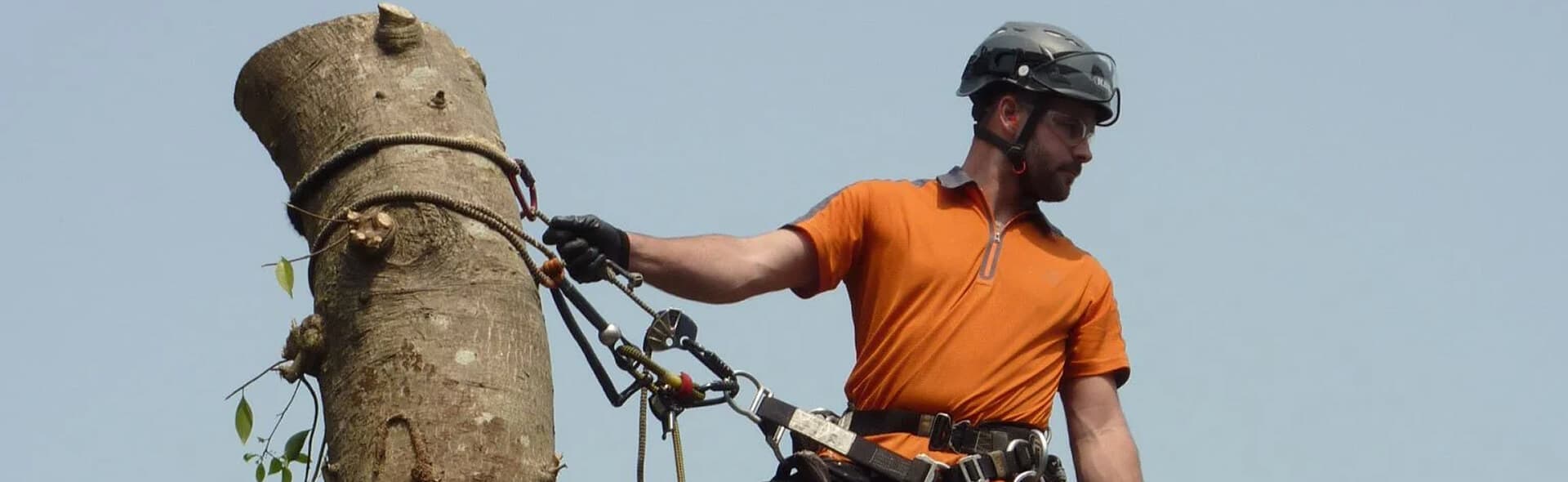
A skilled climbing arborist available to perform specialized tree pruning, technical removals, rigging, and other aerial tree work using rope and climbing systems.
Find Trusted Storm Response Crews
Near You
Questions about Storm Response Crews?
Need help finding the right help for your project? Our team is here to assist with any questions about storm response crews and specialized services.