

Wood and Debris Hauling
Cutting a tree down is half the job. Getting it off site is the other half, and it's the half that quietly eats the schedule — a crew making trips to the tip is a crew not cutting, and a full chip truck stops work entirely until it's emptied.
 Wood and Debris Hauling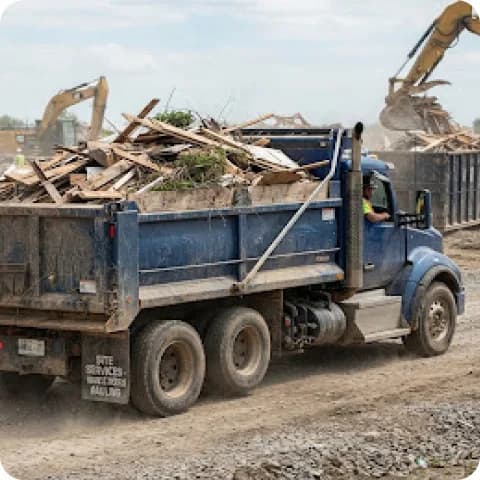
Hauling as a separate service fixes that. Logs, brush, chip and storm debris are collected and taken away by someone whose job that is, while the crew stays on the tools. On storm work it's often the deciding constraint: after a major event, the cutting is rarely the bottleneck — the hauling is.
Post the job with the volume, the material, the access and where it's going, and hauling providers whose service radius covers you are notified. Disposal arrangements and any tip fees are agreed directly between you and the provider.
The need is usually one of three things: a yard that has filled up, a landing that has to be clear before the next phase, or a storm week where the volume has outrun every truck you own. In all three the cutting is finished and the job is still not done, which is the most frustrating kind of delay there is.
What to establish is what they'll take and in what state. Some providers want material cut to length; others have a grapple and will take whole trunk sections. Whether they can reach the piles from where the truck parks matters as much as capacity — a full load they can't get to is no load at all. Ask both, and send photographs.
Hauling is priced by the load, by the day, or by volume, with disposal either included or charged on. Tip fees are where surprises live, so agree who pays them and at what rate before the first load leaves. Everything financial is between you and the provider.
For providers, hauling is steady work that needs no climbing crew and scales with everyone else's busy season. State your body capacity, whether you have a grapple, whether you'll take logs as well as brush, and — most importantly — whether you have your own disposal site, which is often the deciding factor.
Distance is a real cost here, so set a service radius that the fuel justifies rather than an optimistic one. Storms are the exception that rewrites the maths: travel dates put you in searches in an affected region for as long as you're working there.
Why hauling is a service of its own
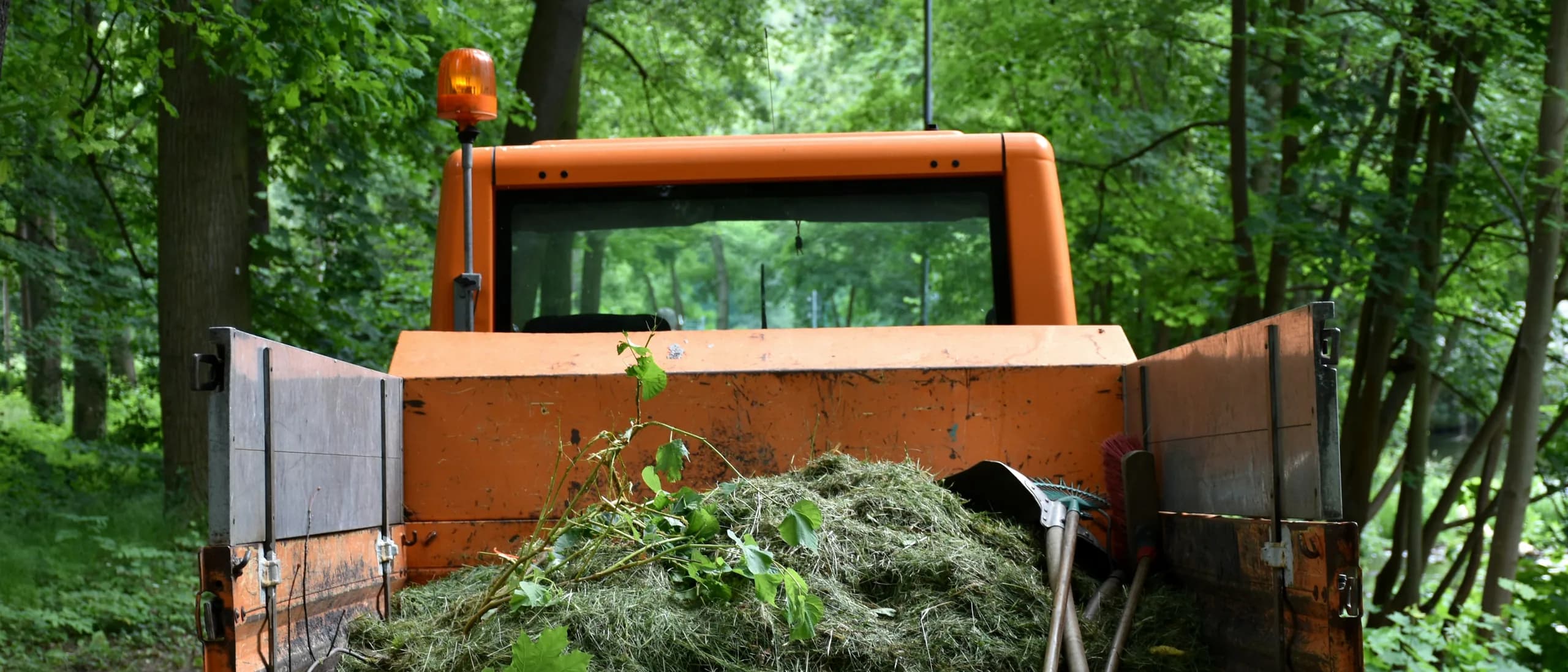
Because it is a distinct bottleneck. A crew making trips to the tip is a crew not cutting, and a full chip truck stops a job entirely until it is emptied. Separating the hauling lets the expensive people stay on the tools.
The volumes involved surprise people. A single mature tree fills more truckloads than most customers imagine, and a week of storm work produces more material than a company's own vehicles can shift while also doing the cutting.
It is also the last thing the customer sees. A site cleared properly is what gets a company recommended, and the difference between adequate and immaculate is usually one more load.
What can be hauled, and in what state
Brush, chip, logs, trunk sections and general storm debris are all standard, but providers differ on what they will take and how it must be presented. Some want material cut to length and stacked; others arrive with a grapple and take it as it lies.
Reach matters as much as capacity. A full load the truck cannot get to is no load at all, so describe where the piles sit relative to where a vehicle can park, and mention fence lines, hedges and gates.
Mixed material packs badly. Brush and rounds in the same body waste space, and separating them at the source often saves a whole trip.
What hauling costs, and the tip-fee question
Priced by the load, by the day, or by volume. Distance drives it, because fuel and road time are the real cost, and a long haul to a distant tip changes the arithmetic entirely.
Disposal is the line that causes disputes. Some providers have their own site and include disposal; others haul to a location you nominate and pass tip fees on. Establish which before the first load leaves — this is the single most common surprise on a hauling invoice.
Rates and disposal terms are agreed directly between you and the provider. Treelign handles no payments.
Storm work and volume spikes
After a major event, hauling rather than cutting is what limits how fast an area is cleared. Every company has saws; far fewer have enough trucks, and disposal sites fill and reroute traffic in ways that slow every run.
Expect different pricing during those weeks, and expect the providers who answer to be travelling. Crews come from outside the affected region because everyone inside it is committed.
Providers who have set travel dates covering the area appear in searches there for as long as they are working, which is how a company staffing a cleanup finds capacity that is not already booked.
Hiring wood and debris hauling on Treelign
Post the job with the volume, the material, how it is distributed across the site, where a truck can park and where it is going. Photographs are worth more than an estimate, since piles are notoriously hard to eyeball.
Providers within range are alerted immediately, and profiles state body capacity, whether they carry a grapple, whether they take logs as well as brush, and whether they have their own disposal.
Hauling is frequently posted alongside climbing, chipping or grinding on the same job — each service has its own crew size and fills independently, so the disposal is not waiting on the removal or the other way round.
Frequently Asked Questions
What can be hauled?

Logs, brush, wood chip, tree sections and general storm debris. Providers differ on what they'll take and in what state — some want material cut to length, some can handle whole sections with a grapple. Describe the material and its size and the right providers will answer.
Is disposal included in the price?
It's between you and the provider, and worth settling before the day. Some include disposal at their own site, some haul to a location you nominate, some charge tip fees on. Unexpected disposal charges are the most common dispute on hauling work, and they're entirely avoidable in advance.
Can hauling be booked without hiring the removal crew?
Yes — it's offered independently. Companies use it to clear a yard, empty a landing after a big job, or handle the aftermath of work their own crew has already done. It's also frequently posted as one service on a job alongside climbing, chipping and grinding.
How is volume described?
In truckloads, cubic yards, or simply photographs — the last being the most reliable. Say what the material is, roughly how much, and how it's distributed on site: three tidy piles by a driveway and the same volume spread across a back garden are very different jobs.
What is Treelign?
Treelign is a hiring platform built specifically for the tree care industry. Tree service companies post jobs for the positions and equipment they need, and qualified tree professionals nearby are notified and can apply immediately. It connects companies with contract climbers, crane and bucket truck operators, stump grinders, trainers and other specialists — without cold calls or Facebook group posts. Browsing is public; a free account is needed to apply, message a provider, or see a job's exact address.
How is Treelign different from Facebook groups or general job boards?
General job boards and Facebook groups aren't built for tree work. Treelign is structured around the industry's actual positions and equipment, matches by service area, and notifies qualified professionals the moment a job is posted. Instead of broadcasting into a group and hoping the right climber sees it, you reach the people who do that specific work near you — and each service on a job carries its own crew size, so a job can be filled by several providers at once.
Related services

Barge
Barge and marine access for tree work that can only be reached from the water — island properties, lake and river frontage, causeways and shorelines. Covers the vessel, the crew to run it, and the loading and hauling of crew, equipment and wood across the water.

Spider Lift with Operator
A compact, tracked aerial lift with outriggers designed to travel through narrow-access areas and operate on lawns, slopes, and sensitive terrain. Spider lifts provide elevated access in locations conventional bucket trucks cannot reach. This service includes the lift and a qualified operator.

Storm Response Crews
Crews available at short notice for storm work — clearing roads and access, removing trees off structures and vehicles, and supporting utility restoration. Storm work is its own discipline: hazardous trees under load, long shifts, and travel to the affected area, often for days at a time.

Contract Climber
A skilled climbing arborist available to perform specialized tree pruning, technical removals, rigging, and other aerial tree work using rope and climbing systems.
Find Trusted Wood and Debris Hauling
Near You
Questions about Wood and Debris Hauling?
Need help finding the right help for your project? Our team is here to assist with any questions about wood and debris hauling and specialized services.