

Vegetation Management / Right-of-Way
Right-of-way work is measured in miles, not in trees. Transmission and distribution corridors, pipelines, rail, roadside and access routes all have to be kept open and compliant, and the work comes back on a cycle whether or not anyone has the crew to do it. A contractor holding a corridor contract needs mowing capacity, mulching capacity, and hand crews with saws — often all three, often at once, often a long way from home.
 Vegetation Management / Right-of-Way
The mix is what makes it hard to staff. A mile of corridor might be mechanically mowed, a stretch of it mulched where machines can reach, and the rest cut by hand where they can't. Add selective treatment, access issues, landowner coordination and weather, and the crew you need in week three is not the crew you needed in week one.
On Treelign you post the work with the services and crew sizes it actually needs, and providers whose service radius covers the corridor are notified. Because providers set their own travel radius, and can list travel dates for work away from home, the people who answer are the ones genuinely willing to be there. You agree rates directly with them.
You need right-of-way crews when a corridor's cycle comes due, when an inspection turns up encroachment, or when a storm has left a line of debris along miles of easement. It is rarely one urgent tree — it is a length of ground that has to be brought back to a specification and documented, usually to a deadline someone else set.
The thing to judge when hiring is whether a provider's equipment suits your terrain rather than whether they own a mower. Wet ground, steep side slopes, and stream crossings all rule machines in or out, and a mulcher that thrives on flat easement will sink in a bottom. Ask what they run, what ground pressure it exerts, and how they handle the sections their machines can't reach — the answer to that last question is usually where the schedule is won or lost.
Corridor work is priced by the mile, by the acre or by the day depending on how the prime contract is written, and hand crews price differently from machines. Whatever the unit, it's agreed directly between you and the provider; Treelign handles the introduction and nothing financial. Settle mobilisation, fuel, and who is responsible for landowner notification before the first machine moves.
For providers, right-of-way work is the antidote to a thin winter. It runs on cycles rather than on weather, it is measured in weeks rather than in days, and the contractors who hold these projects need capacity far more often than they need another quote. List the machines you run and the crews you can field, and set a service radius that reflects how far you'll genuinely travel for a multi-week booking.
Because corridors cross county lines, the work is almost never where the crew lives. Treelign's travel dates exist for exactly this: set the window and the destination, and you appear in searches there for the duration, carrying only the services you've brought. Contractors staffing a project two states away can find you the same way they'd find someone local.
What right-of-way work involves week to week
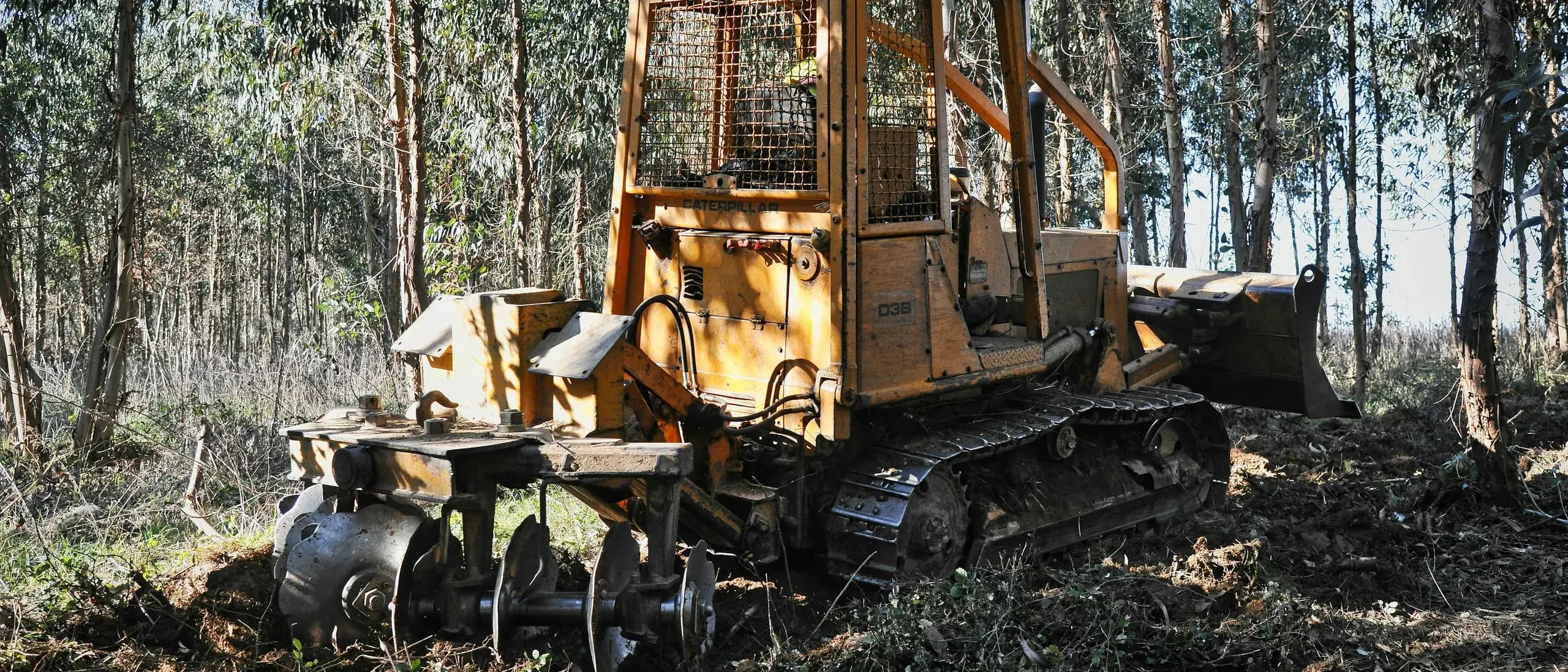
A corridor project starts with a specification and a map: what may stay, what must go, how wide the cleared width has to be, and which sections are accessible to machines. The crew then works the corridor in sequence rather than by tree, which is the fundamental difference from residential work — the unit is a length of ground, and progress is measured in miles cleared per week.
Most corridors need three capabilities running together. Mechanical mowing or mulching handles the open stretches, hand crews with saws take the sections machines cannot reach or should not damage, and selective treatment slows regrowth so the next cycle is cheaper. A contractor who only has one of the three subcontracts the other two, which is why these jobs are posted as several services at once.
Access and landowner coordination shape the schedule as much as the vegetation does. Gates, stream crossings, wet ground and the need to notify property owners before entering all cost days, and a crew that has worked corridors before builds those days into the plan rather than discovering them.
Equipment, terrain and what actually fits
Ground conditions rule machine selection more than acreage does. A tracked mulcher spreads weight and copes with soft ground; a wheeled mower is faster on firm, level easement and useless on a slope. Ask any provider what ground pressure their machine exerts and what gradient they will work — the honest answers are narrower than the brochure.
Stem size sets the second limit. Mulching heads are rated for a diameter, and the rating is a maximum rather than a comfortable working figure. Anything above it has to be felled conventionally, so a corridor with mature stems along part of its length needs a saw crew whether or not the machines are there.
Hand crews remain essential and are frequently underestimated. Steep banks, wetland margins, areas near structures and sections with buried services all get cut by people rather than machines, and on some corridors that is the majority of the labour hours even when it is a minority of the miles.
How corridor work is priced
The prime contract usually pays by the mile or by the acre, and subcontracted capacity is bought by the machine day or the crew day. Those two units do not convert cleanly, which is where margin is won and lost: a machine that averages half a mile a day on a difficult section is a very different cost per mile from one averaging two.
Mobilisation is a real line item on corridor work because the equipment is heavy and the sites are remote. Expect it to be quoted separately, and expect longer bookings to carry a lower effective day rate for exactly that reason — a two-week engagement spreads the haul across ten working days rather than one.
Everything financial is agreed directly between you and the provider. Treelign introduces the two of you and stays out of it, so put fuel, per-diem, standby time and who handles landowner notification in writing before the machines move.
What goes wrong on right-of-way projects
Underestimating the hand-crew share is the classic error. A project priced on machine production, with the inaccessible sections waved through as a rounding error, runs out of schedule in the last fortnight when those sections turn out to be a third of the labour.
Weather is the second. Corridor ground that carries a machine in August will rut in November, and ruts on an easement are a landowner complaint, a reinstatement cost and sometimes a contract condition. Crews that stop rather than push through are protecting your contract as well as their machine.
The third is documentation. Utilities and pipeline operators audit cleared width and specification compliance, and a subcontractor who cannot evidence what they cleared leaves the prime contractor exposed. Agree at the outset what records you need and who produces them.
Hiring right-of-way crews on Treelign
Post each capability as its own service with its own crew size — mulching or mowing with an operator, hand crews with saws, hauling if material is leaving site. Filling them separately means a mulching contractor and a hand crew can both answer the same job without either having to supply the other, and each service closes when its slots are full while the rest stays open.
Providers are matched by service and by service area, and each sets their own radius. Anyone who has added travel dates covering your corridor appears too, which matters here more than almost anywhere: right-of-way work is rarely near the crews who do it, and the people willing to travel are exactly the ones you need.
Applications arrive as soon as the job is posted, with profiles, reviews and equipment listed, so you can compare capability before messaging anyone. Rates and terms are settled directly between you and the provider.
Frequently Asked Questions
What counts as right-of-way vegetation management?

Any cyclical clearing that keeps a corridor open and compliant: electric transmission and distribution rights-of-way, pipeline corridors, rail, roadside and highway verges, and access roads. It typically combines mechanical mowing or mulching with hand crews for the areas machines can't reach, plus selective treatment to slow regrowth.
How is this different from land clearing?
Land clearing is usually a one-off: a site is cleared so something can be built on it. Right-of-way work is maintenance on a cycle — the same corridor, cleared again every few years, to a specification that says what may stay and what must go. The equipment overlaps heavily; the contracts, documentation and repeat nature don't.
Can I find crews willing to travel for corridor work?
Yes. Providers set their own service radius, and can add travel dates when they'll be working away from home — during those dates they appear in searches at that destination, for the services they've brought with them. Corridor work often runs well outside anyone's home area, so this is the feature to lean on when staffing it.
What crew and equipment should I post for?
Post each capability as its own service with its own crew size: mulching or mowing machines with operators, hand crews with saws, and hauling if the material is coming off site. Filling them separately means a mulching contractor and a hand crew can both answer the same job without either having to supply the other.
What is Treelign?
Treelign is a hiring platform built specifically for the tree care industry. Tree service companies post jobs for the positions and equipment they need, and qualified tree professionals nearby are notified and can apply immediately. It connects companies with contract climbers, crane and bucket truck operators, stump grinders, trainers and other specialists — without cold calls or Facebook group posts. Browsing is public; a free account is needed to apply, message a provider, or see a job's exact address.
How is Treelign different from Facebook groups or general job boards?
General job boards and Facebook groups aren't built for tree work. Treelign is structured around the industry's actual positions and equipment, matches by service area, and notifies qualified professionals the moment a job is posted. Instead of broadcasting into a group and hoping the right climber sees it, you reach the people who do that specific work near you — and each service on a job carries its own crew size, so a job can be filled by several providers at once.
Related services

Land Clearing / Forestry Mulching
Clearing standing brush, undergrowth and small-diameter trees from a site, either by grinding it in place with a forestry mulcher or by felling and removing it. Mulching leaves the material on the ground as a chip layer instead of hauling it off, which is often faster and cheaper than clearing and burning. This service includes the machine and a qualified operator.

Wood Processing / Log Milling
Turning removed trees into usable material rather than waste — portable sawmilling on site, slabbing, and processing logs into lumber or timber. Useful when a customer wants the tree kept, or when a removal produces logs worth more milled than chipped. This service includes the mill and a qualified operator.

Firewood Processing / Wood Splitting
Bucking, splitting and stacking cordwood, whether on a jobsite or at a yard. Ranges from a splitter and an operator for an afternoon to a processor working through a landing's worth of logs. This service includes the equipment and the labour to run it.

Tub Grinder with Operator
A high-capacity tub or horizontal grinder for reducing logs, stumps, brush and yard waste into mulch or biomass at volume. Used on land-clearing projects, storm cleanups and at processing yards where a chipper cannot keep up. This service includes the grinder and a qualified operator.
Find Trusted Vegetation Management / Right-of-Way
Near You
Questions about Vegetation Management / Right-of-Way?
Need help finding the right help for your project? Our team is here to assist with any questions about vegetation management / right-of-way and specialized services.